

A02. DHUB Museums
Museu Tèxtil i d’Indumentària
History
The history of the Museu Tèxtil i d’Indumentària dates back to 1883, when Barcelona City Council acquired its first collections of textiles with the aim of creating a museum dedicated to the subject. For a good part of the 20th century, the collections of fabrics, clothing and lacework were split between various museums.
Then, in 1964, the Museu Tèxtil opened in the old Santa Creu Hospital, while 1969 saw the birth of the Museu d’Indumentària in the Palau del Marquès de Llió thanks to a donation by Manuel Rocamora. And, in 1971, the Lacework Museum opened in the Palau de la Virreina.
It was not to be till 1982 when the Museu Tèxtil i d’Indumentària was united under one roof, with the Museu de les Puntes moving there that same year as the Lacework Section. In 1993, the museum put on a new permanent exhibition of its historic collection of fabrics and clothing, and, since 2003, it also dedicates exhibitions to fashion-related subjects.
The permanent exhibition
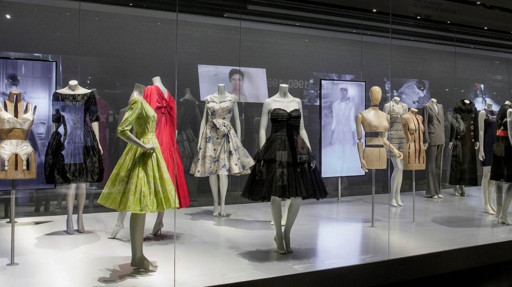
The new permanent exhibition of the Museu Tèxtil i d’Indumentària in Barcelona, “Dressing the body”, explains how clothes modify the image of the body with certain actions that have tended to either restrict or liberate it. It covers from the 16th century to the present day.
The exhibition is organised following a graphic and conceptual itinerary with objects. Visitors are invited to critically observe the manipulation of the body’s appearance and draw on historical and contemporary examples in order to visualise how we have moved on from modifying the body’s image with clothes to doing so with plastic surgery.
Exhibition "El cos vestit"
Browse the collection
The collections
The Museu Tèxtil i d’Indumentària possesses countless objects and pieces of major artistic and historical value that make up their collections of garments, fabrics and jewellery. Regarding their collection of clothes, the museum allows you to take a journey through the history of textiles, from the 16th century right up to the modern day. The museum’s collections include Coptic, Hispano-Arab, Gothic and Renaissance fabrics, as well as embroidery, a section on lacework and its collection of prints. Also worth mentioning is its collection of jewellery, made up of close to five hundred pieces made and produced in Spain.
See further information on the various collections:
Costume
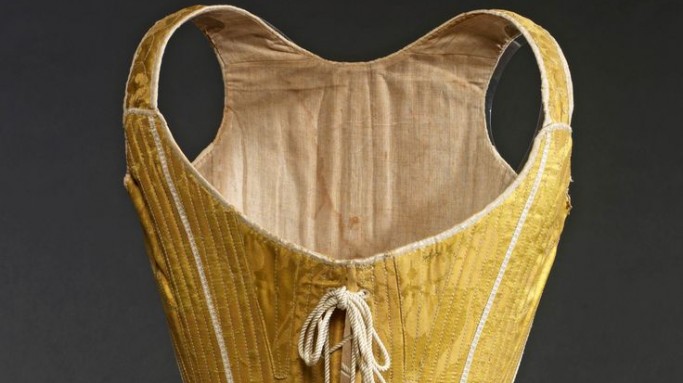
The costume collection includes numerous pieces that show the evolution of clothes from the 16th century through to the present day, amongst which are: short Castilian capes; garments figured and embroidered in silk; garments in French Regency style (Louis XV and Louis XVI); wedding dresses; garments dating from after the French Revolution and Directoire, Consulate, Empire, bell-shaped, Noucentista and Art Deco style garments.
The most important collection comes from the donation made by Manuel Rocamora i Vidal in 1965, 3,500 pieces which constitute the foundation stone of today’s museum.
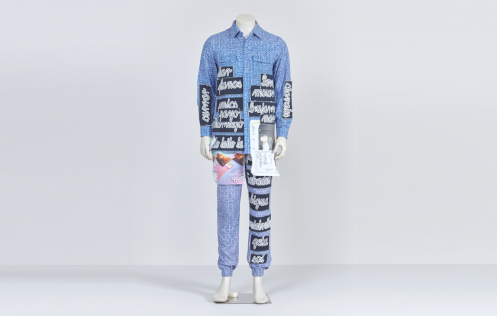
The contemporary collection is made up of 158 dresses designed by Cristóbal Balenciaga, 152 dresses designed by Pedro Rodríguez and 81 dresses by Manuel Pertegaz. The museum also has dresses signed by international fashion names like Azzédine Alaïa, Emilio Pucci, Pierre Balmain, Pierre Cardin, and Karl Lagerfeld.
Court dress, circa 1760
Textiles
Amongst the resources we find Coptic textiles, from the Pascó, Homar and Bosch i Catarineu collections, as well as the Trallero donation. There are also the Hispano-Arabic textiles, from the 12th to the 15th centuries, from the Pascó collection.
Among the Italian textiles, mention should be made of those from Lucca and from the tomb of Santa Maria de Cervelló. The Renaissance and Baroque textiles, together with those from the 18th century, constitute a very valuable collection that includes Valencian textiles from the 18th century.
Dress fabric, 1735-1740
Liturgical ornaments
The collection includes several items of major importance for the history of textile arts, as for example the three-piece set, or vestments, of Sant Valeri, from the cathedral of Lérida, one of the museums most important sets. Also of note are the cope of Sant Fructuós and the three-piece set of Sant Vicenç, both from the cathedral of Santa Maria in La Seu d'Urgell (Lérida). The two chasubles from the chapel of Sant Jordi in the Palau de la Generalitat (Barcelona), date from the 16th century, and are of major importance in embroidery, as they mark the beginning of Renaissance embroidery in Catalonia. The Bertrand collection contains various liturgical ornaments of great value from the 16th to 18th centuries.
Cape from the 3-piece-suit of St Valerius, 13th century
Embroidery
The embroidery collection covers pieces from the 12th to the 20th centuries. The most important piece of Medieval Catalan embroidery is the Pennon of Sant Ot from the 12th century, from the cathedral in La Seu d'Urgell in Lérida, as it is the first known piece to be signed by a woman.
The museum conserves towels, matching sheets and pillow cases, as well as tablecloths and napkins that are carefully embroidered and worked with lace in the Catalan Art Nouveau style from the turn of the 19th century.
Dress fabric, 1783-1789
Lacework
The oldest piece is an altar frontal depicting the Annunciation and the Madonna and Child in filet darning surrounded by bobbin lace, from the 16th century. Other decorative pieces of filet darning are from the 17th century, as are some examples of needle lace, like the Venetian lace and Rosalines from the 17th century. From the 18th century there are fragments of point de France lace and a set of jabot and cuffs of pearled Rosaline lace.
Also of great interest is the 19th century collection of mantillas, mostly black, blonde lace and Chantilly. The most important piece from the lacework collection is called the Polychrome blonde lace, from the second half of the 19th century, this is a rectangular piece made with round-pillow blonde and depicts a bouquet of flowers in different colours.
Lacework fan, circa 1850
Printed fabrics
The more important printed fabrics are from the 18th century and the beginning of the 19th century. They include prints produced by the first calico factories in Barcelona. Two print dresses stand out for their special nature: one from 1775-1780, made of toile de Jouy, bearing the brand of the Oberkampf mill in Jouy-en-Josas, the most important mill in France during the 18th century. From the same mill comes a remnant of the Lion in Love, based on a drawing by Jean-Baptiste Huet, from 1806.
Commemorative handkerchief, 19th century
Jewellery
The jewellery collection comprises some five hundred pieces designed and produced in Spain covering an extensive period of time. A diversity of styles is to be seen, from the exuberant colours of the Renaissance jewels to the staid creations of the Spanish Baroque, which adhered to strict rules on combining gems and metals, and from the meticulous detail of the Neoclassical pieces in the form of knots, flowers and garlands to the jewels in the Empire style, with their almost archaeological re-creation of Greco-Roman splendour.
Necklace & bracelet set, Barcelona, Aureli Bisbe Latorre